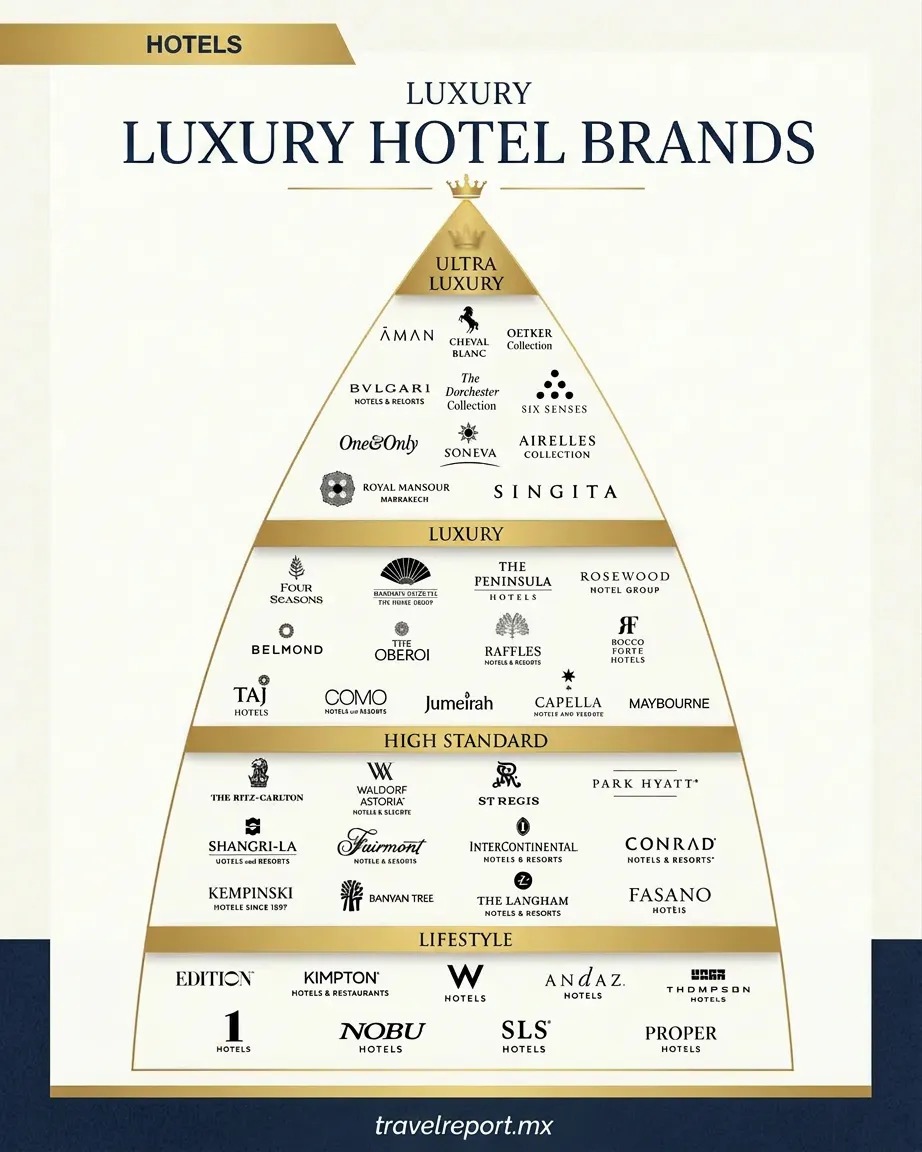
Costa Rica is no longer just a nature-and-adventure destination: it's now one of the fastest-growing luxury markets in Latin America. To grasp how far up the country has climbed, it's worth looking at this pyramid of the world's major hotel brands —and asking how many of them already operate (or are about to) on Tico soil.
How many of those pyramid brands are in Costa Rica?
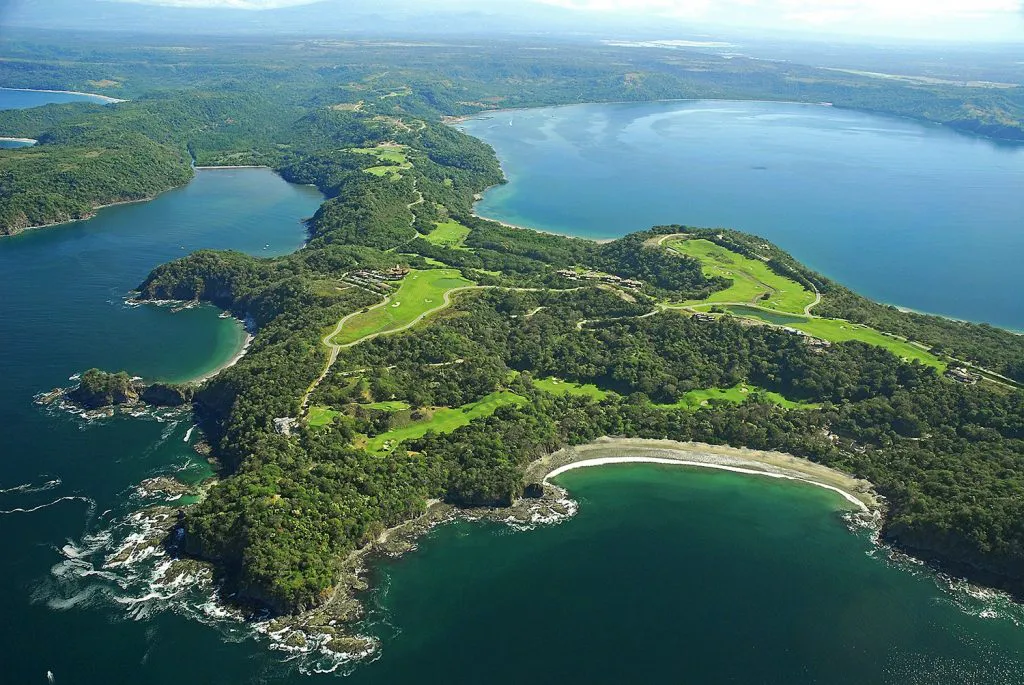
Almost all the action is concentrated in Guanacaste, and especially on the Papagayo Peninsula. Here's the real picture as of 2026:
Ultra Luxury / Luxury
Four Seasons → Papagayo Peninsula. The icon of the country's luxury tourism and the anchor that triggered the entire development of the area.
The Ritz-Carlton (Reserve) → "Nekajui, a Ritz-Carlton Reserve" opened in February 2025 in Papagayo: the first Ritz-Carlton Reserve in Central and South America.
Rosewood → Papagayo Peninsula. Under construction, with opening slated for 2026 (its first hotel in the country).
High-End
Waldorf Astoria → Punta Cacique, Guanacaste. Opened in September 2025, perched on the cliffs of the Pacific.
Lifestyle
Andaz (Hyatt) → Papagayo Peninsula. Operating for years now, right beside the Four Seasons.
W Hotels → Reserva Conchal, Guanacaste. Open since 2018; one of the brand's most recognized resorts in the region.
The Papagayo Peninsula alone brings together three heavyweight brands from the pyramid —Four Seasons, Ritz-Carlton Reserve, and Andaz— within a single 1,400-acre private community. That's the "anchor effect" in its purest form.
The Papagayo Effect: how one brand transforms an area
When a brand like Four Seasons or Rosewood picks a location, it doesn't arrive alone: it activates a value chain that reshapes the entire region.
Real estate appreciation. Surrounding lots and properties appreciate immediately and durably; the "brand effect" passes straight through to land prices.
Infrastructure. Roads, electricity, drinking water, and telecommunications are upgraded to serve the hotel —and stay for the community.
Skilled employment. Hundreds of direct jobs and thousands of indirect ones (suppliers, transport, gastronomy, crafts), formalized and trained to international standards.
Anchor effect. Once the first brand is in place, the rest follow: premium hotels, restaurants, spas, marinas, and boutiques cluster around it.
On top of this come two less visible but equally decisive effects: nation branding —when a Four Seasons or a Ritz-Carlton Reserve chooses Costa Rica, it validates the destination for the high-net-worth global traveler, who spends more per visitor— and the environmental standard, since these chains demand sustainability certifications that end up protecting the area's natural resources.
Papagayo: the textbook case
When Four Seasons arrived on the Papagayo Peninsula, it didn't just bring luxury travelers. It lifted the value of the whole area, drew in the Andaz and, more recently, Nekajui (Ritz-Carlton Reserve), while the Waldorf Astoria set up on neighboring Punta Cacique and Rosewood pushes toward a 2026 opening. In less than a decade, Guanacaste went from a beach destination to one of the most recognized luxury hubs in Latin America.
And the country still has room at the top of the pyramid: Ultra Luxury brands like Aman, Six Senses, or Belmond have yet to arrive. Each one that does will keep raising Costa Rica's standard —and the value of its land.